

Rare genetic disorder officially named after Abu Dhabi doctor
Groundbreaking El-Hattab-Schmidts Syndrome discovery brings hope to families of affected children
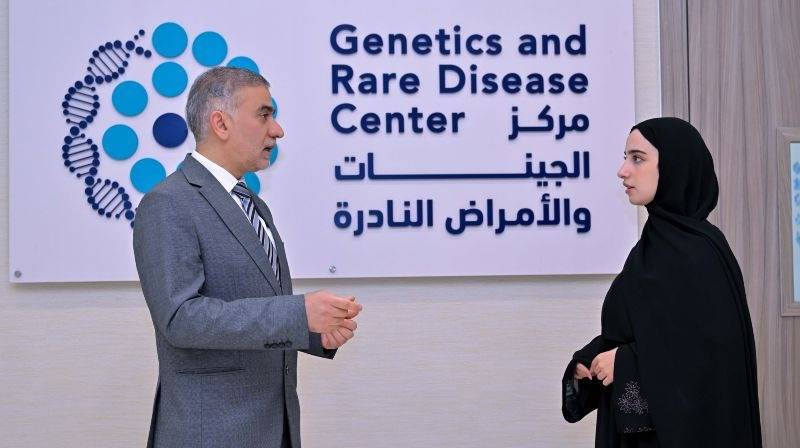
ABU DHABI – A rare inherited disorder affecting brain development and muscle strength has been officially named after an Abu Dhabi-based specialist at Burjeel Medical City, highlighting the UAE’s growing contributions to global medical research.
The condition, now called El-Hattab-Schmidts syndrome, was identified through research led by Professor Ayman W. El-Hattab, Consultant Clinical Genetics and Director of the Genetics and Rare Disease Centre.
This marks the third rare condition in scientific literature to carry his name.
Understanding the Syndrome
El-Hattab-Schmidts syndrome is a genetic neurodevelopmental disorder impacting how a child’s brain and body develop from early life. Children with the condition typically show global developmental delay and intellectual disability. A defining feature is low muscle tone, which can make infants appear floppy and cause feeding difficulties. As they grow, children may face learning challenges, coordination problems, and, in some cases, seizures.
Doctors have also observed eye-related issues, distinctive facial features, and structural brain differences on imaging. Some children may develop breathing difficulties or heart conditions that require monitoring. The disorder follows an autosomal recessive inheritance pattern, meaning both parents usually carry a silent copy of the gene without knowing it. Genetic testing is essential for diagnosis.
The discovery process
The research began in 2018 when Prof. El-Hattab’s team evaluated three children with similar unexplained neurological and developmental symptoms. Routine genetic testing did not match any known disorder, but variants were identified in the PPP1R21 gene, previously unlinked to disease.
“The similarity of the clinical features and the biological importance of the gene suggested we were looking at a new syndrome,” Prof. El-Hattab said.
In 2019, Dr. Schmidts and a multinational research group independently reported patients with comparable PPP1R21 variants, reinforcing the evidence. Additional case reports eventually established the disorder as a distinct syndrome, leading to its formal naming in recognition of both researchers.
Why diagnosis matters
For families, receiving a diagnosis often ends a long and challenging search for answers. Identifying the genetic cause allows healthcare providers to tailor care and gives families clarity. Confirming the genetic defect also enables parents to consider IVF with pre-implantation genetic testing to reduce recurrence risk in future pregnancies.
Prof El-Hattab has been involved in identifying over 10 novel genetic syndromes and describing numerous ultra-rare conditions. He emphasises that advances in genetic testing in the UAE are accelerating discoveries that were previously impossible.
“Many children still present with complex symptoms without a clear diagnosis. Advances in genetic testing are helping us uncover more conditions and provide answers to families,” he said.
Rare disease research also extends beyond individual patients. Discovering new disease-causing genes helps scientists understand disease mechanisms and opens pathways for future therapies. Prof. El-Hattab’s message to families seeking answers is one of persistence: “Do not give up. With rapid progress in this field, more diagnoses are becoming possible.”